
Recently, our factory technicians held an exchange meeting on no-teach programming technology and provided related training to sales staff. No-teach programming technology has become increasingly popular in recent years and is a major trend. Below, we will briefly introduce no-teach programming.
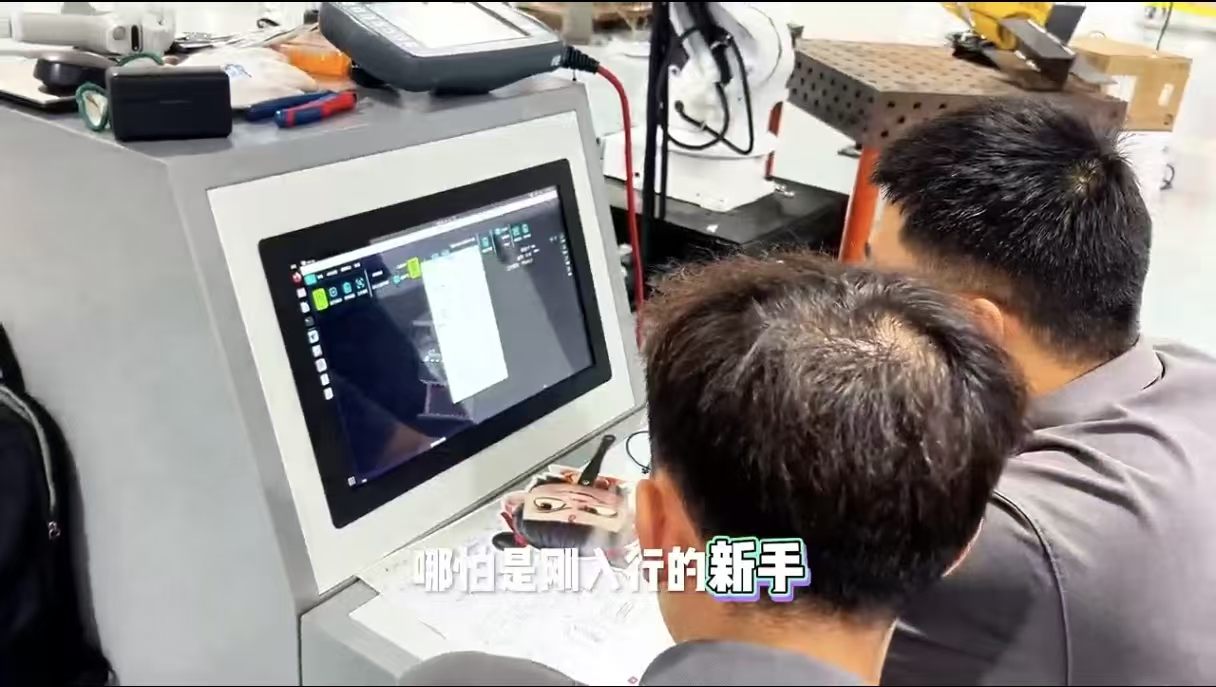
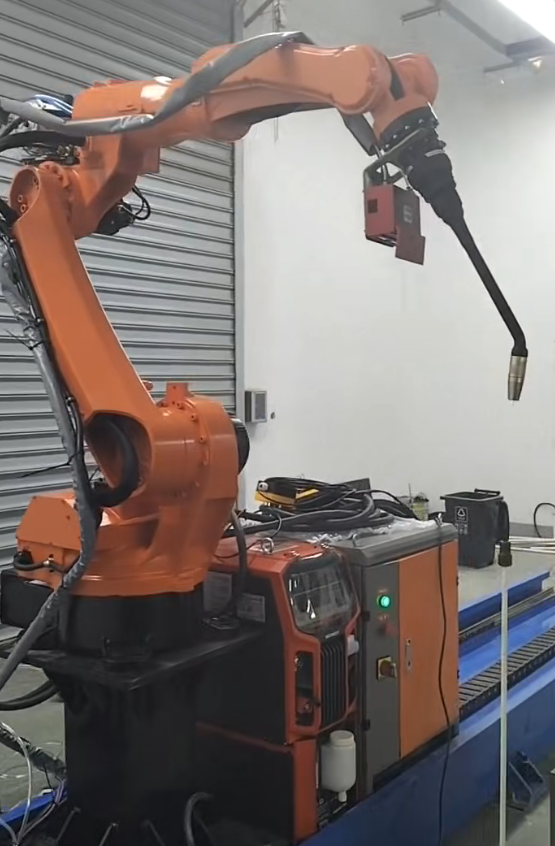
The new genaration of teaching-free industrial robot welding workstation is powered by self-developed 3D laser vision and AI intelligent algorithms, it completely overturns the conventional operation modes of manual drag teaching and offline programming for traditional robots, delivering fully automatic intelligent welding solutions for steel structure, new energy, shipbuilding, construction machinery and other industries.
Conventional welding robots rely on professional engineers for point-by-point teaching. For small-batch, multi-variety non-standard workpieces, model changeover and debugging often take hours. The manufacturing sector is also plagued by a shortage of over 3 million skilled welders, rising labor costs, and unstable welding quality affected by operator experience, creating major obstacles for enterprises’ intelligent transformation. This teaching-free laser robot achieves breakthroughs in core underlying technologies: equipped with high-precision linear laser scanning sensors, it builds a 3D point cloud model with one click after workpiece placement. It identifies weld positions, groove gaps and assembly deviations within 5 seconds, while the AI system autonomously generates optimal welding paths and matches digital process parameter databases, realizing true scan-to-weld operation with zero manual teaching and programming.
Core Technical Advantages
1. Ultra-low operation threshold: No programming or professional welding certification required; general operators can operate independently after 1–2 hours of training. Cumbersome teach pendant operations are eliminated, effectively resolving the welder shortage crisis.
2. Dramatic changeover efficiency: Debugging time for switching between different workpieces is cut to under 15 minutes, with over 90% reduction in teaching and programming man-hours, perfectly matching flexible production lines for small-batch customized orders.
3. High-precision adaptive welding: Trajectory positioning accuracy reaches ±0.05 mm, capable of adaptively compensating assembly errors up to ±30 mm and welding thermal deformation. Pre-weld defect detection accuracy hits 0.2 mm; welding defect rate drops by 72% year-on-year, with a stable first-pass yield rate of 99.8%.
4. Wide compatibility for materials & scenarios: Compatible with carbon steel, stainless steel, aluminum alloy and high-strength thick plates. Applicable to new energy battery trays, 9-meter energy storage frames, 20mm ship thick plates, excavator structural parts, complex curved welds of fan volutes, multi-layer multi-pass welding and special saddle-shaped weld processing.
5. High integration adaptability: Robotic arms fit ABB, FANUC, KUKA and domestic 6-axis robots, compatible with ground rails, positioners and gantry workstations for quick retrofitting of old production lines, shortening ROI cycles significantly.
On-site test data shows that compared with the traditional manual + teaching robot mode, overall welding production capacity of production lines rises by 50%–150%, labor costs drop by 50%–70%, post-weld grinding and rework volume decreases by 40%, and comprehensive long-term manufacturing costs are greatly reduced.
Industry executives stated that teaching-free laser industrial robots mark a milestone upgrade for welding automation, elevating robots from “replicating manual movements” to “autonomous intelligent processing”. The equipment especially empowers small and medium manufacturers to complete digital transformation at low cost, and boosts the independent development of domestic high-end welding equipment. The R&D team will continuously upgrade multi-robot coordination, offline model import and cloud-based process optimization functions, expanding global application coverage in overseas construction machinery and steel structure markets.
Post time: Jun-10-2026


